
Your Message Left. But Where Did It Go?
Picture this. You explain a proposal during a meeting. People nod, ask questions and thank you. You leave thinking everyone understands both the plan and the reason behind it.
A week later, you hear what reached the person making the decision. A key detail has gone missing. A condition has become a promise. Your suggested deadline now sounds like a firm commitment.
This is an example, but the risk is easy to recognise. The message someone acts on may differ from the message you sent.
That is why I encourage people to look beyond their delivery. Ask what happens to the information next.
Key Takeaways
- Sending a message does not confirm understanding.
- Messages can change as people share them.
- Protect the facts, context and next step.
- Check what reaches the person making decisions.
- Follow the outcome, not just the delivery.
What causes poor communication in the workplace?
Unclear words, missed emails and poor listening can all play a part. Yet a message can also lose meaning after a useful conversation.
Consider an instruction moving from a manager to a supervisor, then to a team. Each person chooses what to include when sharing it.
A short summary may be all the next person needs. But it may also remove the reason, a risk or an important limit.
People bring their own beliefs, past experiences and assumptions to what they hear. They may focus on different parts of the same message.
For example, one person hears a deadline. Another hears a concern about quality. A third leaves thinking the task is optional.
Poor communication in the workplace can involve gaps between what was said, understood and passed on.
You cannot remove every risk. You can make those gaps easier to spot before they affect the work.
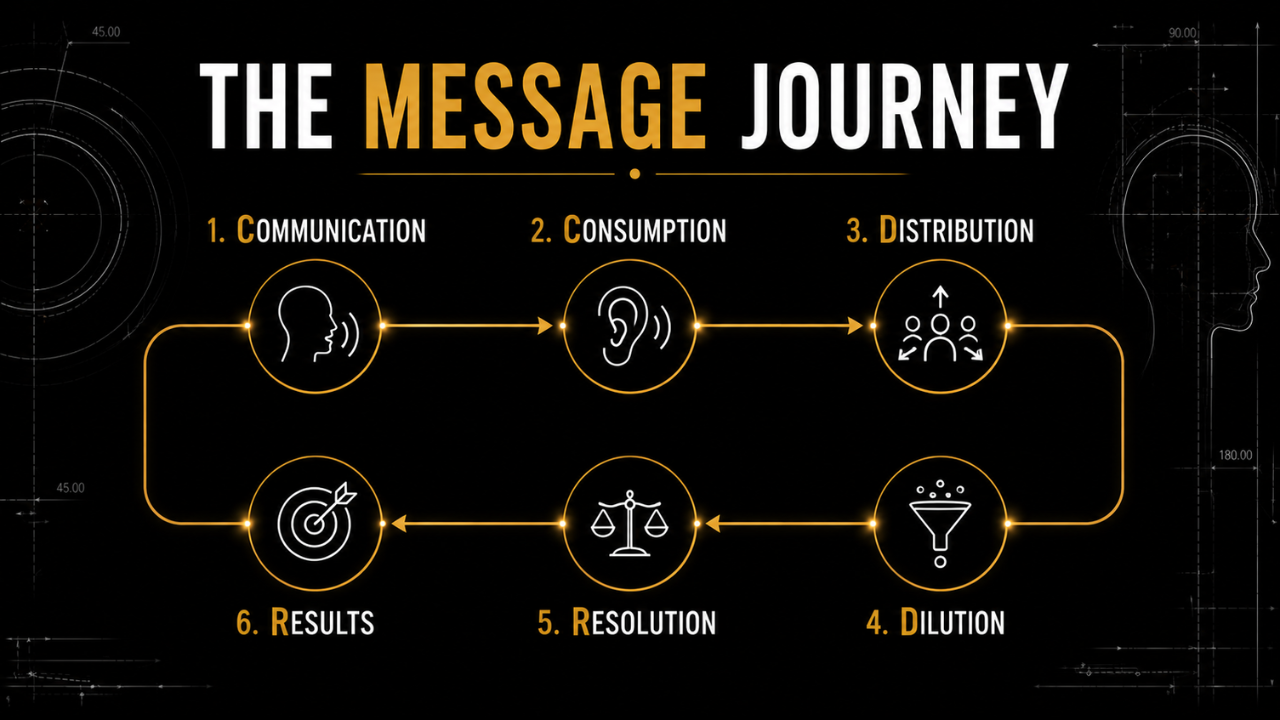
Message Mapping: follow the journey
In my Communication Intelligence work, I use Message Mapping to examine a message’s journey towards a decision and result.
The question is simple: “What happened to my message after it left me?”
This shifts your attention towards the people who need the information, the handovers involved and the action you want.
I use six checkpoints: Communication, Consumption, Distribution, Dilution, Resolution and Results. Together, their initials form CCDDRR.
These are checkpoints for reviewing communication. They are not a fixed route that every message follows. Some messages stay between two people. Others pass through several teams.
Use the model to find where understanding needs support. Then decide what you can change
The six CCDDRR checkpoints
1 Communication: make the meaning clear
Start with the outcome you want. What does the other person need to know, decide or do?
Explain the main point, why it matters and the next step. Separate facts from suggestions. Make conditions and limits clear.
Adapt your delivery to the person in front of you. Within DACE, a Driver may prefer the outcome first. An Analyst may need evidence and detail.
A Connector may want to understand the effect on people. An Explorer may engage through possibilities and the wider picture.
Treat those styles as clues to explore, rather than labels that settle what someone needs. Ask, listen and adapt.
Changing how you explain something should preserve the facts and meaning.
2 Consumption: check what was understood
Receiving information and understanding it are different things. An email can arrive without being read. A spoken instruction can be heard without its purpose becoming clear.
Silence does not confirm understanding. Neither does a nod.
Use a question that makes checking a shared task. Try: “Before we finish, what are the next steps as you see them?”
You can also say: “Which part needs more detail?” That gives someone space to raise a gap without feeling tested.
For important work, compare their understanding with your intention. Correct any difference while you can still discuss it together.
3 Distribution: know who needs the message
Who else needs this information? Who will pass it on? Does the final decision-maker have access to the full version?
These questions help expose handover risks. They also prevent you from assuming that one conversation has reached everyone involved.
Give the person sharing your message a useful reference. That might be a short written brief or a current document.
Include the key facts, the reason, any conditions and the required action. Where versions matter, make the current version easy to identify.
Poor communication in the workplace becomes harder to address when nobody knows which message people are using.
4 Dilution: protect what must survive
A message can lose meaning when someone shortens it. It can also gain meaning you never intended.
“This may be possible after approval” can become “This is possible.” The words left out change what the next person believes.
A summary does not always cause harm. The test is whether it keeps the information needed for the next decision.
Ask: “What must remain clear when someone repeats this?” Identify the facts, conditions and risks that cannot be dropped.
Make those points easy to find. For high-stakes instructions, use the original record alongside any spoken summary.
5 Resolution: connect understanding to a decision
Once the information reaches the right person, what needs to be resolved?
That could mean approving a proposal, choosing an option or agreeing who owns a task. Sometimes the right decision is to seek more information.
Check whether the person has enough accurate information to decide. Be clear about what remains uncertain and what needs checking.
People act on their understanding of a message. Better understanding can support better decisions, but it cannot guarantee them.
Time, resources, judgement and other evidence still matter. Your job is to make the communication useful to that decision.
6 Results: check what happened
The last checkpoint asks whether the action produced the intended outcome. Was the task completed? Was the issue resolved? Did anything unexpected happen?
An immediate reply may confirm receipt. It does not tell you whether the later work met the need.
Agree a suitable follow-up point. If the outcome differs from the plan, review the message’s journey before deciding where the problem lies.
Perhaps the instruction was unclear. Perhaps a condition disappeared. Perhaps everyone understood, but the resources were missing.
That review helps you address the actual cause and improve the next handover
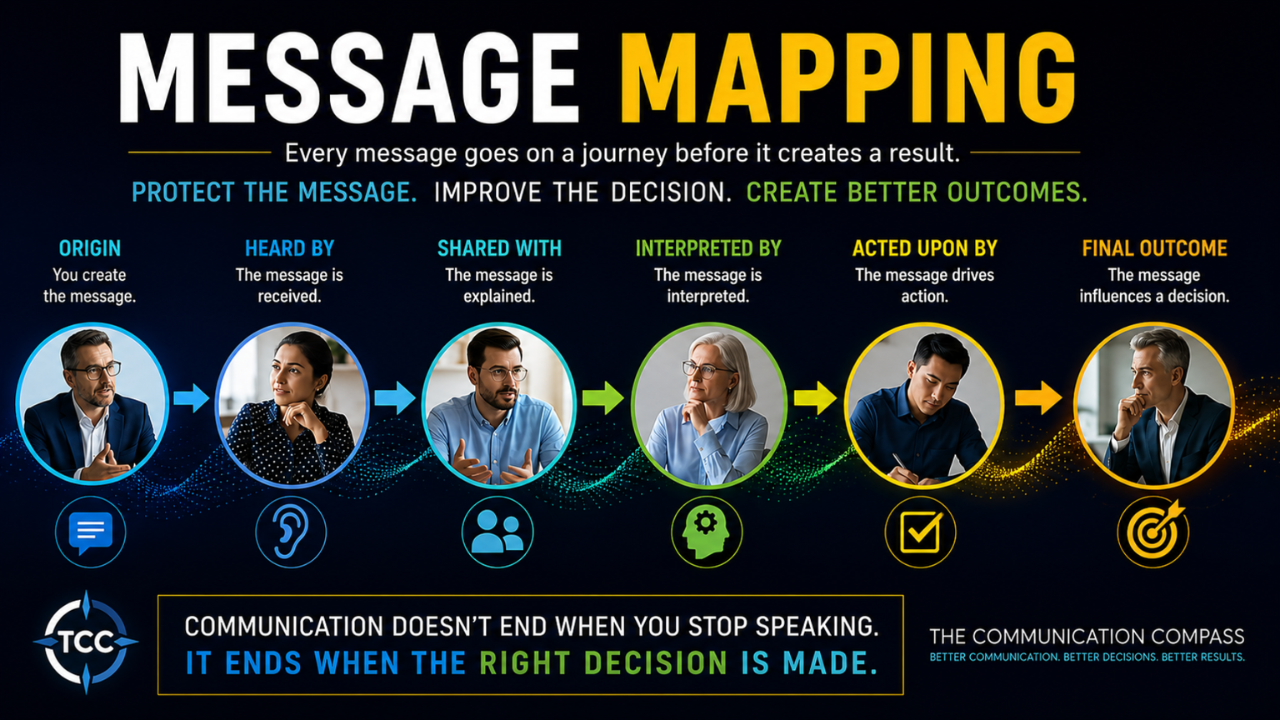
How to protect your next important message
Choose one message that matters this week. It could be a client proposal, a change to work or a team instruction.
Before sending it, write down three things: the main point, why it matters and what should happen next.
Then use these checks:
Understanding: How will you check what the first person understood?
Handover: Who else needs the information, and who will share it?
Meaning: Which facts or conditions must stay intact?
Decision: What needs deciding, and by whom?
Follow-up: When will you check the result?
For example, a delivery change may affect several people. “It’s coming Friday” may leave too much unclear.
The team may also need the time, unloading plan, access needs and contact person. Share those details in one clear record.
Ask the person arranging the work to confirm the plan. Then check that anyone affected has the same information.
This approach gives you a practical way to address poor communication in the workplace. It focuses attention on the places where your message could change.
FAQ’s
Q. What is poor communication in the workplace?
A. Poor communication in the workplace occurs when people lack the clear, timely information or shared understanding needed for their work. It can involve unclear instructions, missing details, unchecked assumptions or messages that change during handovers.
Q. What does CCDDRR stand for?
CCDDRR stands for Communication, Consumption, Distribution, Dilution, Resolution and Results. I use these six Message Mapping checkpoints to review how information reaches people, supports decisions and leads to outcomes.
Q. How can I stop messages losing meaning?
Make the main point, context and required action clear. Check understanding, identify who needs the information and provide a useful written reference. Keep important conditions visible and follow up on the result.
Final Thoughts
Addressing poor communication in the workplace means looking at the whole journey. Clear delivery matters, but so does what people understand and pass on.
Before your next important conversation, ask: “What needs to survive when this message leaves me?”
Then check the understanding, the handover and the outcome. Those checks can help turn a clear message into useful action.
