
Why the importance of human connection goes beyond being friendly
The importance of human connection becomes clear when a conversation leaves you feeling heard, rather than simply answered. Digital tools can help us create that feeling. But sending a message does not tell us how someone received it.
Consider a colleague who asks for help with a deadline. You reply with the correct instructions. Yet you miss their main concern: they cannot finish two urgent tasks at once.
Your answer may be accurate. It still leaves the real issue unresolved.
Connection involves paying attention to the person and the task. What are they trying to achieve? What is unclear? What do they need you to understand before they can move forward?
This matters in conversations with clients, colleagues and suppliers. Clear information helps people act. Feeling able to question that information helps them flag problems before those problems grow.
You do not need a long personal conversation every time. You need enough attention to discover what matters.
Key Takeaways
- Check meaning before reacting to tone.
- Show understanding before offering your answer.
- Choose channels that suit both people.
- Confirm the action, owner and deadline.
What gets lost when we communicate through screens
An email gives us words. It does not give us the speaker’s voice or their chance to explain a pause.
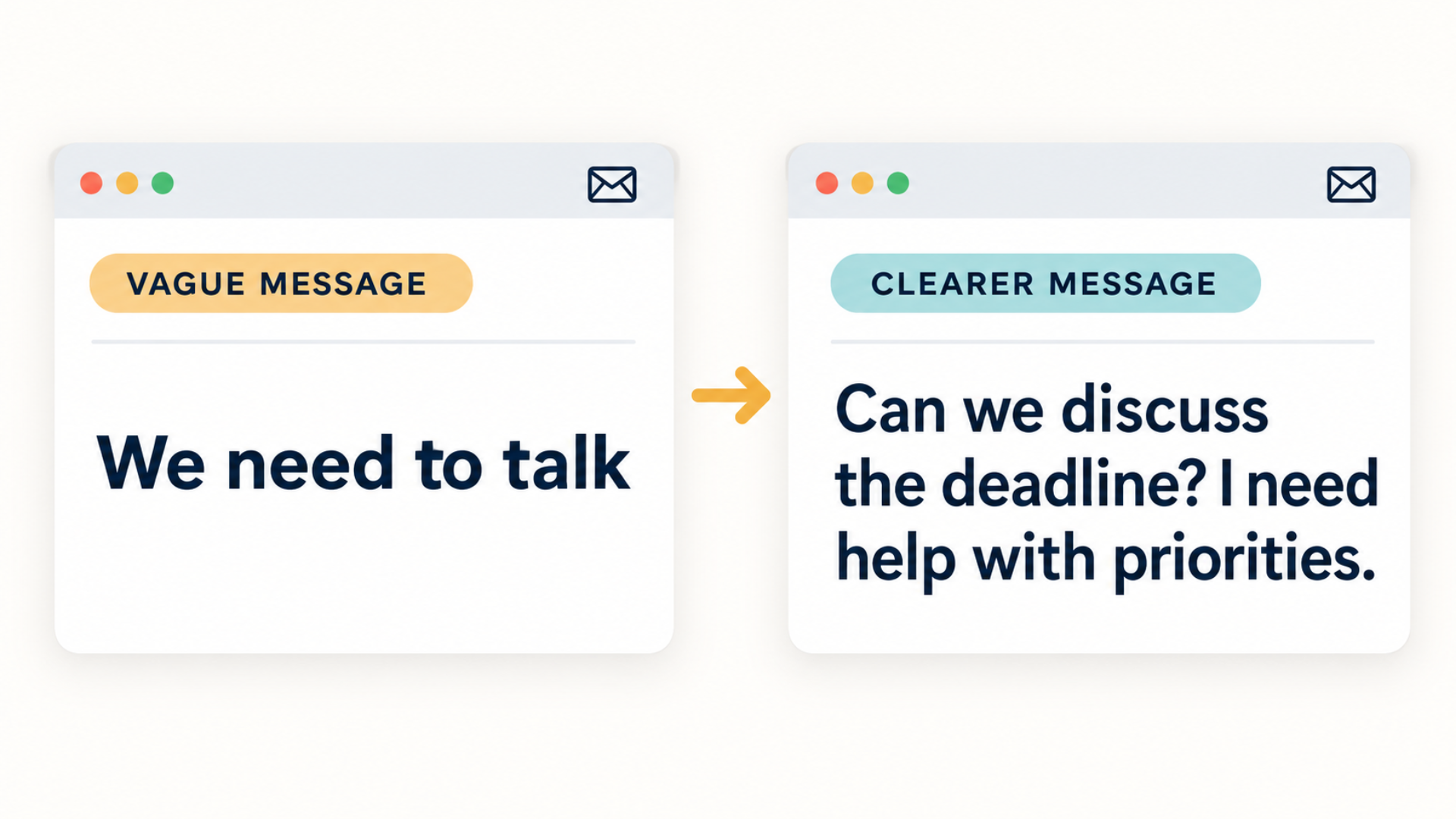
A message saying “We need to talk” could mean several things. Someone may have a concern, a new idea or a simple question.
The words alone do not establish which meaning applies.
We often fill those gaps using our own beliefs, past experiences and emotions. A previous difficult meeting may shape how we read today’s message.
Before reacting, separate what you can see from what you have added.
The fact is that someone asked to talk. The idea that they are angry is an interpretation. You can check it.
Try asking: “Of course. What would you like us to cover so I can prepare?”
When considering the importance of human connection, this is a useful starting point. Give people space to explain their meaning.
Show understanding before offering an answer
A quick reply can be helpful. However, speed alone does not show that you have understood someone’s situation.
Suppose a client writes: “We still haven’t received the update. Our meeting is tomorrow.”
A reply saying “I’ll send it later” leaves several questions open. Does “later” mean this afternoon or tomorrow? Has their meeting deadline been noticed?
A clearer reply would be: “I understand you need it for tomorrow’s meeting. I’ll send the update by 3pm today.”
If you cannot meet that time, say so. Explain what you can provide and ask whether it meets their immediate need.
For example: “The full report will be ready tomorrow. Would the key figures by 3pm help you prepare today?”
These are illustrative examples, rather than accounts of real clients. The principle is simple: respond to the need behind the message.
Avoid claiming you understand if you are still unsure. Ask a focused question first.
Choose a channel that suits the conversation
Email works well when people need a clear record or time to consider information. Messages can suit short updates and simple questions.
A call may help when you need to explore an issue together. A meeting may suit a sensitive discussion or complex decision.
No channel works best for every person or situation.
Think about urgency, complexity and the other person’s needs. Also consider accessibility, their working hours and their preferred way to communicate.
Some people need written information to process details. Others may find a phone call difficult or need captions during video meetings.
Ask rather than assume.
When a written exchange keeps circling, suggest another route: “We seem to be discussing two different points. Would a short call help?”
Give an alternative if a call is unsuitable. You could send a short summary with the unresolved questions clearly listed.
The importance of human connection includes adapting the conversation so the other person can take part.
Give people attention during digital conversations
Being on a video call does not always mean giving someone your attention. Reading emails while they speak can leave you missing important details.
Where possible, close unrelated tabs and silence alerts before the conversation starts.
If you must take notes, explain that. Otherwise, looking away may leave the other person wondering what you are doing.
You might say: “I’m noting the deadlines so I can confirm them with you at the end.”
Allow time for answers. A pause could reflect thought, a connection delay or uncertainty about the question.
Do not treat silence as proof of agreement.
Instead, invite a response: “What concerns do you have about that plan?”
Avoid judging attention or honesty from eye contact alone. Camera position, personal needs and the situation can affect what you see.
Check understanding through the conversation. The importance of human connection rests on making room for someone’s contribution, not measuring their appearance on screen.

Use the Communication Compass model before you send
The Communication Compass offers four steps: Observe, Understand, Adapt and Deliver. You can use them when writing a message or preparing a call.
Start by deciding your desired outcome. Do you need to clarify a concern, agree a deadline or help someone make a decision?
Observe
Read the message carefully. Notice the request, dates and any stated concerns. What information is present? What is missing?
Keep facts separate from your interpretation. A short reply is evidence of a short reply. It does not establish someone’s mood.
Understand
Consider what the other person needs to achieve. If you lack key context, ask before deciding what they mean.
For example: “Which part needs to be ready for Friday?” This is more useful than assuming every task shares that deadline.
Adapt
Choose words, detail and a channel that suit the situation. Keep a simple update brief. Explain reasoning when it helps someone assess a decision.
Adapt without hiding important information. A friendly tone cannot replace a clear answer about cost, timing or responsibility.
Deliver
Make the message clear and usable. State what happens next, who owns the action and when it is due.
Invite clarification where needed. Sending your reply completes the transmission. It does not prove that both people understand the same thing.
Turn a digital exchange into an agreed next step
A conversation can feel pleasant and still leave people unclear about what to do.
Suppose someone ends a call with “Great, we’ll sort that.” Who will sort it? What will they do? By when?
A short written summary can close those gaps.
For example: “I’ll send the revised quote by Thursday afternoon. You’ll review it before our Friday call.”
Then ask whether anything needs correcting. This gives the other person a chance to identify a misunderstanding.
Do not use “Any questions?” as your only check when the decision has several parts.
Ask something specific: “Does Thursday give you enough time to review the figures?”
Follow through on the commitment. If the timing changes, tell the person before they have to chase you.
The importance of human connection becomes practical here. People can see that their needs were heard and included in the plan.
Three habits to try this week
Choose one digital conversation where a small change could help.
First, add context to a request. Explain what you need, why it matters and when you need it.
Second, check one assumption before responding. If a message seems blunt, ask about the issue rather than reacting to an imagined tone.
Third, finish one conversation with a clear next step. Confirm the action, owner and deadline in language both people understand.
You can also review your own messages from the reader’s point of view. Have you explained enough? Are you asking several questions at once?
These habits give the importance of human connection a place in everyday work. They help you move from sending information to building shared understanding.
FAQs:
Q: What is human connection in communication?
A: Human connection involves giving someone attention and helping them feel heard and understood. It includes listening, asking questions and responding to their needs.
Q: Can digital communication build human connection?
A: Yes. Emails, messages and video calls can support meaningful conversations. Clear context, thoughtful questions and reliable follow-up help people communicate through those tools.
Q: When should I switch from an email to a call?
A: Consider a call when repeated replies leave the issue unclear or you need to explore several points together. Check that it suits the other person.
Final Thoughts:
Recognising the importance of human connection does not mean abandoning digital tools. It means using them with greater care.
Before your next reply, ask: “What does this person need me to understand?” Then make the next step clear.
That gives the conversation a better chance of producing shared understanding and useful action.
Speak soon.
